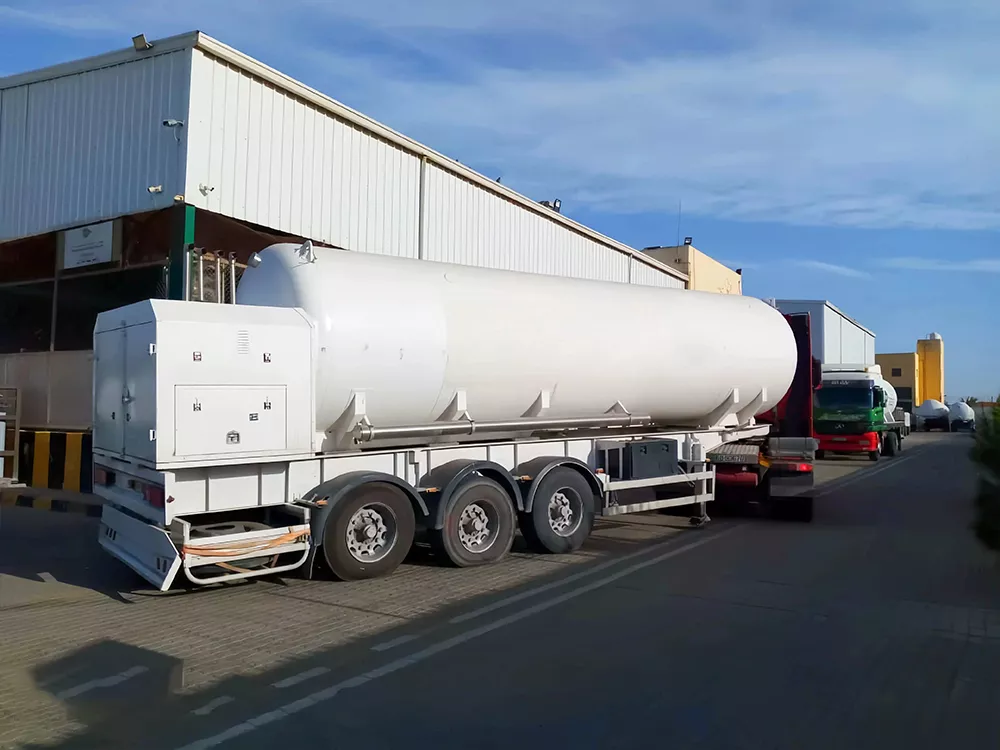
What is LNGand how is it transported is becoming a key question for industries seeking cleaner, efficient energy. LNG, or liquefied natural gas, allows natural gas to travel long distances in liquid form, using ships, trucks, rail, and containers. In this guide, we’ll explore LNG production, storage, transportation methods, and regasification, explaining how it reaches homes, factories, and vehicles safely. Whether you’re curious about cryogenic trucks, LNG carriers, or ISO tank containers, you’ll learn how LNG combines high energy density, safety, and flexibility in real-world applications.
Understanding LNG – Liquefied Natural Gas
What is LNG?
LNG, or Liquefied Natural Gas, is simply natural gas turned into a liquid for storage and transport. Its main component is methane, but it also contains small amounts of propane, butane, ethane, and nitrogen. It is colourless, odourless, non-toxic, and non-corrosive, making it safe to handle in controlled conditions. Unlike the gas you get through pipelines, LNG exists in a super-cooled liquid state. This gives it a much smaller volume than its gaseous form, while keeping the same energy content.
| Property | LNG | Gaseous Natural Gas |
|---|---|---|
| State | Liquid | Gas |
| Temperature | ~ -162 °C (-260 °F) | Ambient |
| Volume | 1/600 of original gas volume | Full gas volume |
| Odour | None | Odorized for detection |
| Energy density | Very high | Lower |
Why is Natural Gas Liquefied?
Natural gas is mostly methane, a light, low-density fuel. Transporting it as a gas over long distances can be expensive and inefficient. By cooling it to -162 °C, LNG reduces its volume by roughly 600 times, making shipping by tankers, trucks, or rail practical. This is especially useful in regions without pipelines, such as islands, remote industrial sites, or overseas markets.
Once LNG arrives at a receiving terminal, it goes through regasification. Heat is added in specialized vaporizers, converting the liquid back into gas. Then it can flow through local pipelines to homes, factories, and power plants.
-
LNG allows gas delivery to areas pipelines cannot reach
-
Cooling makes LNG space-efficient and easier to transport
-
Regasification returns it to normal gaseous state for end-users
LNG Production Process
From Natural Gas to LNG
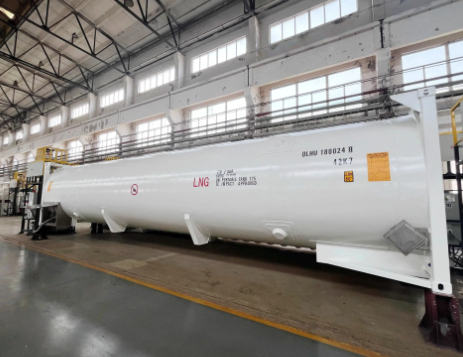
Before natural gas becomes LNG, it must be purified. We remove water, CO₂, sulphur, and mercury, ensuring the liquid is safe and stable. Next comes liquefaction. The gas is cooled to around -162 °C (-260 °F), transforming it into a liquid. At this temperature, the gas volume shrinks about 600 times, making storage and transport practical.
| Step | Purpose | Method/Notes |
|---|---|---|
| Purification | Remove impurities that freeze in LNG | Filtration, chemical absorption |
| Liquefaction | Cool gas into liquid state | Cryogenic cycles |
| Storage | Keep LNG at stable low temperature | Insulated tanks, pressure control |
-
LNG production is energy-intensive, using specialized compressors and heat exchangers
-
Purity affects energy content and safety
-
Liquefaction transforms gas into a liquid you can ship across oceans
Common Liquefaction Technologies
There are several methods used to produce LNG efficiently. Here are the main ones:
-
APCI / C3MR Process – Most widely adopted. It uses multi-stage propane precooling followed by a mixed refrigerant system including methane, nitrogen, ethane, and propane.
-
DMR (Dual Mixed Refrigerant) Process – Similar to APCI but employs two refrigerant streams for improved efficiency in some plants.
-
Linde & Cascade Methods – Less common but still effective for small- to medium-scale plants.
A key feature in modern plants is the spiral-wound heat exchanger. It boosts efficiency by maximizing heat transfer while keeping the system compact.
LNG Transportation Methods
Shipping LNG Across Oceans
Transporting LNG across oceans is a highly technical process. Ships must keep the liquid at around -162 °C, preventing vaporization and minimizing energy loss.
There are two main types of LNG carriers:
-
Membrane tanks – thin, flexible membranes line the hull, combined with high-performance insulation. They allow more cargo in limited ship space.
-
Moss-type spherical tanks – large, visible aluminum spheres that are self-supporting, highly robust, and easy to inspect.
During the voyage, boil-off gas (BOG) naturally forms as a small fraction of LNG evaporates. Modern fleets manage it in multiple ways:
-
Reliquefaction systems – turn evaporated gas back into liquid
-
Use as fuel – power ship engines efficiently
-
Combustion units – safely burn excess gas if needed
Safety measures on LNG carriers include:
-
Advanced leak detection systems that monitor tanks 24/7
-
Emergency shutdown (ESD) systems for rapid isolation
-
Insulated hulls and redundant refrigeration to prevent temperature rise
| Feature | Purpose | Benefit |
|---|---|---|
| Membrane Tanks | Efficient, space-saving containment | Maximizes cargo capacity |
| Moss Tanks | Strong, self-supporting spheres | Easy inspection, very robust |
| BOG Management | Reduce losses, ensure efficiency | Minimized energy waste, safe operation |
| Safety Systems | Prevent spills and leaks | Protects crew, environment, cargo |
Road Transportation
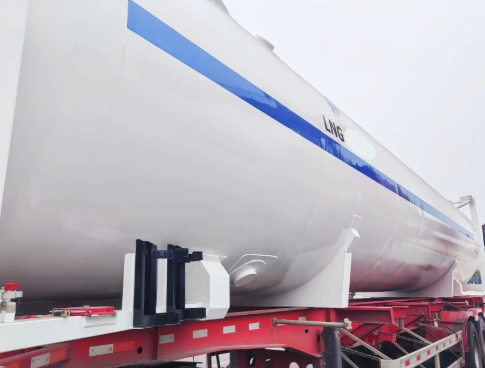
For regional delivery or smaller markets, LNG moves via cryogenic tanker trucks. These trucks are specially built to keep LNG cold and pressurized:
-
Multi-layer insulation using vacuum or perlite
-
Active temperature and pressure monitoring to prevent warming
-
Safety valves and emergency systems for accident prevention
In Europe, all LNG trucks follow ADR regulations, covering:
-
Packaging and equipment standards
-
Driver training and certification
-
Documentation and vehicle signage
Advantages of LNG trucks:
-
Serve industrial plants or refuelling stations far from pipelines
-
Can cover hundreds of kilometers without losing LNG quality
-
Support flexible scheduling for regional deliveries
Rail and Container Transport
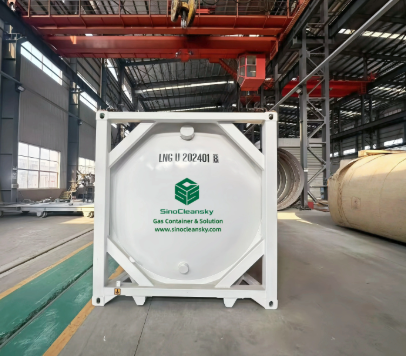
When companies need maximum flexibility, LNG is transported in T75 ISO cryogenic containers. These are standard containers adapted for liquid gas at low temperatures.
-
Capacity: up to 46,000 liters per container
-
Design pressure: ~10 bar for safe storage
-
Intermodal use: can move via rail, road, or sea, ideal for complex logistics chains
Benefits:
-
Ideal for off-grid industries or areas without pipelines
-
Can supply small-scale LNG terminals or refuelling points
-
Compatible with existing container handling equipment for efficiency
LNG Storage and Regasification
Storage Facilities
Once LNG arrives at its destination, it is stored in cryogenic tanks designed for extreme cold. These tanks are engineered to:
-
Maintain temperatures around -162 °C consistently
-
Control internal pressure to prevent gas expansion
-
Provide thermal insulation to reduce energy loss
Unlike regular gas, LNG has a high energy density, over three times that of compressed natural gas (CNG). This means a smaller volume stores much more energy, making it practical for industrial or transport use.
Key Features of LNG Storage Tanks:
| Feature | Function | Benefit |
|---|---|---|
| Multi-layer insulation | Minimizes heat transfer | Keeps LNG cold for longer durations |
| Pressure management | Regulates internal gas expansion | Prevents tank overpressure |
| Temperature monitoring | Continuous readings | Maintains safe storage conditions |
| Large-volume capacity | Holds thousands of cubic meters | Supports industrial & municipal needs |
Regasification Process
After storage, LNG is returned to a gaseous state through regasification. This involves warming the liquid gradually, ensuring safe and controlled vaporization.
Once regasified, it is distributed via pipelines to:
-
Homes for heating and cooking
-
Industries as a reliable energy source
-
Power plants for electricity generation
Small-scale LNG applications are becoming increasingly common:
-
Bunkering stations for ships or ferries
-
Off-grid industrial facilities where pipelines are unavailable
-
Vehicular LNG stations for trucks and buses
FAQ
Q: How much natural gas does one cubic meter of LNG produce after regasification?
A: One cubic meter of LNG produces about 600 cubic meters of natural gas after regasification.
Q: Can LNG be used in vehicles safely?
A: Yes, LNG can safely fuel trucks and buses when stored in cryogenic tanks with proper temperature and pressure control.
Q: What happens in case of LNG leakage?
A: LNG evaporates quickly and rises, reducing flammable puddles; any escaping gas can be safely burned with a flare system.
Q: How far can LNG trucks travel on a single tank?
A: LNG trucks can travel up to approximately 1,600 km on a single tank.
Q: What are the main differences between LNG and CNG?
A: LNG is liquid at -162 °C with high energy density; CNG is compressed gas at ambient temperature and lower energy density.
Conclusion
LNG is revolutionizing energy delivery, offering a versatile, low-emission fuel for industry, transport, and power generation. Its ability to move across oceans, roads, and rail networks makes it indispensable for regions without pipeline access.
At Beijing SinoCleansky Technologies Corp, we support clients as a full-service provider for CNG, LNG, and natural gas solutions. From LNG ISO tank containers to terminal to end-user.