-
The global CNG Tube Skids market was valued at around USD 1.2 billion in 2023.
-
Projections show it reaching USD 2.4 billion by 2032, with a 7.5% annual growth rate. This growth highlights the increasing global reliance on cleaner energy solutions.
Key Takeaways
-
CNG skids are essential for storing and transporting compressed natural gas safely and efficiently.
-
The global market for CNG skids is growing rapidly, projected to reach USD 2.4 billion by 2032.
-
CNG skids offer portability and versatility, making them suitable for various applications, including vehicle refueling and industrial use.
-
Safety features like pressure relief valves and gas leak detectors are crucial for protecting operators and equipment.
-
Regular maintenance and inspections are vital to ensure the reliability and safety of CNG skids.
-
CNG skids contribute to cleaner energy solutions by reducing greenhouse gas emissions compared to traditional fuels.
-
Modular designs allow for quick deployment and customization, meeting specific operational needs.
-
Investing in CNG skids can lead to cost savings and improved operational efficiency for businesses.
CNG Skid Overview
What Is a CNG Skid
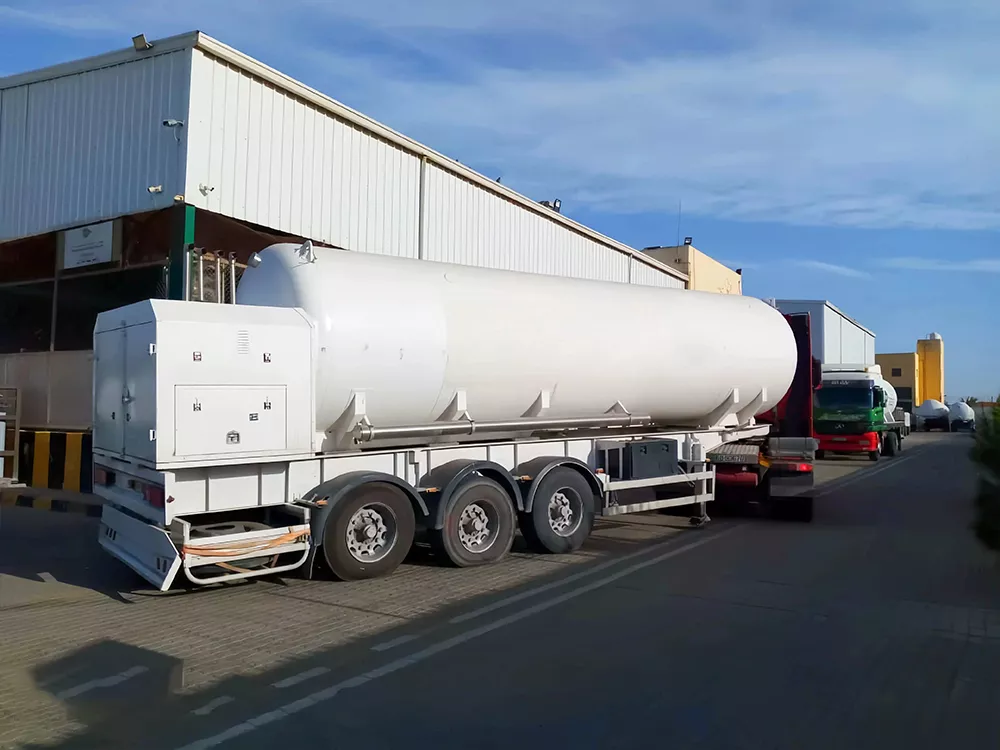
A CNG skid is a modular system designed for the storage, transportation, and distribution of compressed natural gas. This equipment integrates several high-pressure tubes onto a robust frame, creating a compact and efficient solution for gas delivery. Industries rely on CNG skids to move natural gas where pipelines are unavailable or impractical. These systems support fueling stations, industrial facilities, and remote operations. The design allows for both stationary and mobile use, making them a flexible choice for many energy needs.
CNG Tube Skid Structure
The structure of a CNG tube skid sets it apart from other gas storage solutions. Each unit consists of several main components that work together to ensure safety and efficiency. The following table outlines the primary elements:
|
Component |
Description |
|---|---|
|
Framework |
Holds multiple high-pressure tube bundles for CNG storage. |
|
Tubes |
Store compressed natural gas securely. |
|
Valves |
Control the flow of gas within the system. |
|
Support Structure |
Provides stability and durability under harsh conditions. |
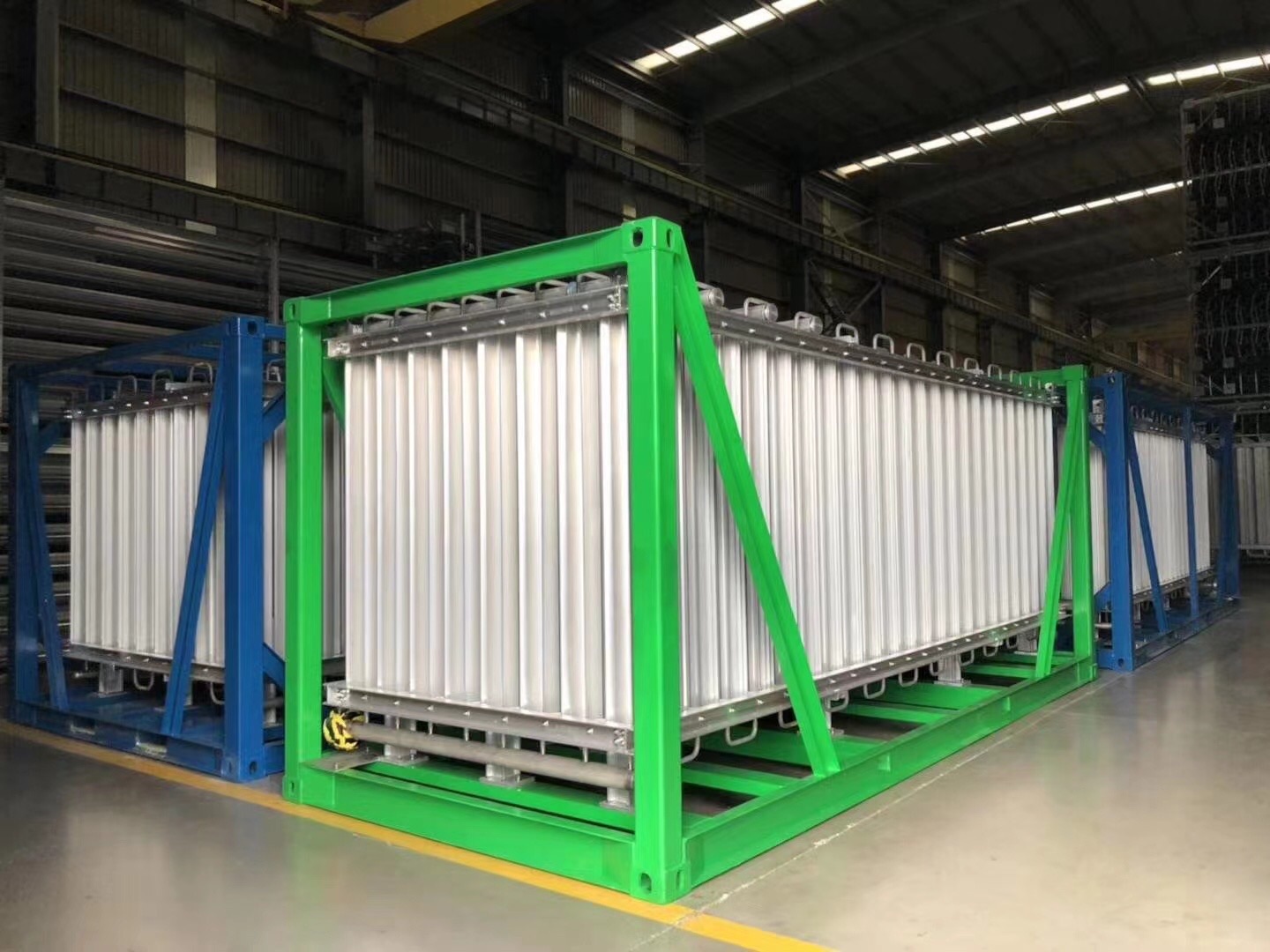
The framework supports the tubes and keeps them secure during transport and operation. The tubes themselves are engineered to withstand high pressures, ensuring the safe containment of natural gas. Valves regulate the flow of gas, allowing for precise control during filling and dispensing. The support structure adds durability, enabling the skid to perform reliably in demanding environments.
Key Features
CNG skids offer several features that make them suitable for a wide range of applications. These include:
-
Portability: The design allows for easy transport, enabling deployment in various locations.
-
Versatility: CNG skids serve multiple purposes, from vehicle refueling to off-grid power generation.
-
Safety Features: Advanced systems such as pressure relief devices and shut-off valves protect users and equipment.
-
Environmental Impact: Using compressed natural gas reduces emissions, supporting cleaner energy initiatives.
-
Cost-Effectiveness: Lower capital costs make CNG skids attractive for temporary or remote operations.
-
Operational Efficiency: The system optimizes energy use, reducing operational expenses.
Note: CNG skids combine advanced engineering with practical features, making them essential for modern energy distribution.
These characteristics ensure that CNG skids remain a preferred choice for industries seeking reliable, safe, and sustainable gas solutions.
CNG Tube Skid Structure
Typical Configuration
CNG tube skids feature a robust frame that holds multiple high-pressure tubes. The tubes are engineered to withstand extreme pressures and environmental conditions. Key materials include steel for durability and aluminum for lightweight applications. Corrosion resistance is essential for extending the lifespan of the skid. Compliance with industry standards and local safety codes ensures safe operation.
Note: The quality of construction materials directly impacts the safety and reliability of CNG tube skids.
Modular and Containerized Design
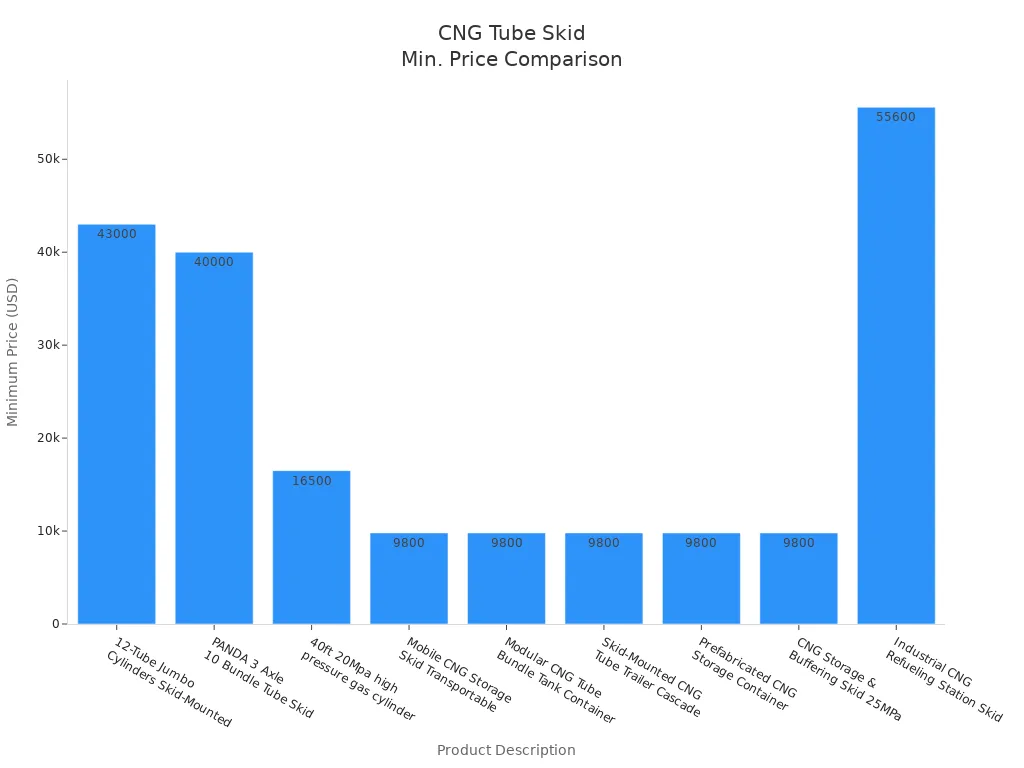
Manufacturers offer a range of modular and containerized options for CNG tube skids. These designs allow for rapid deployment and easy integration with existing infrastructure. The following table presents examples of current market offerings:
|
Product Description |
Price Range |
Min. Order |
|---|---|---|
|
12-Tube Jumbo Cylinders Skid-Mounted Natural Gas CNG Tube Semi Trailer |
$43,000-54,000 |
1 unit |
|
PANDA 3 Axle 40ft 10 Bundle Tube Skid Container CNG Tube tank Trailer |
$40,000-60,000 |
1 set |
|
40ft 20Mpa high pressure gas cylinder cng tube trailer, ISO11120 certificated |
$16,500-18,000 |
1 set |
|
Mobile CNG Storage Skid Transportable Containerized Tube Bank for Natural Gas |
$9,800-10,000 |
1 twenty-foot container |
|
Modular CNG Tube Bundle Tank Container for Industrial Gas Transportation |
$9,800-10,000 |
1 twenty-foot container |
Key Features
Modularity and Customization
Manufacturers increasingly offer modular designs that can be configured and upgraded to meet specific operational needs. Features include:
-
Tailored gas throughput and storage volume
-
Customizable number of dispensers
-
Options for compressor types and control system complexity
-
Integration with existing infrastructure
-
Adaptations for site-specific safety and regulatory requirements
This flexibility allows for faster deployment and greater operational efficiency.
Safety and Quality
Safety and quality are paramount in CNG skid design. Equipment must comply with international standards, such as ECE R110 certification. Regular inspections of connections and fittings are essential to prevent safety issues. Durable, weather-resistant materials ensure long-term reliability.
Application Scenarios
CNG skids serve a variety of functions across industries. The table below outlines primary application scenarios:
|
Application Scenario |
Function |
|---|---|
|
Refueling Stations |
Backbone of NGV refueling infrastructure, enabling rapid fueling of CNG-powered fleets. |
|
Industrial Facilities |
Provide regulated natural gas supply for manufacturing and process heating. |
|
Remote Area Energy Systems |
Enable off-grid power and heating solutions in isolated regions. |
|
Gas Pipeline Maintenance and Bypass |
Support temporary gas flow during pipeline inspection or repairs. |
|
CNG-Converted Power Generation |
Supply clean-burning fuel for backup and emergency power systems. |
CNG skids are essential for transporting and storing natural gas in remote locations, minimizing downtime and enhancing operational efficiency.
CNG Skid Components
High-Pressure Tubes
Tube Capacity
High-pressure tubes form the backbone of any CNG skid. These tubes are engineered to withstand extreme pressures and store large volumes of compressed natural gas. Manufacturers offer a range of tube sizes and capacities to meet diverse operational requirements. The following table presents typical specifications for high-pressure tubes used in CNG skids:
|
Model |
Nominal Working Pressure |
Water Capacity |
|---|---|---|
|
φ559 |
20 MPa |
21.42 m³, 22.5 m³ |
|
φ715 |
20 MPa |
23.58 m³, 25.02 m³, 26.67 m³ |
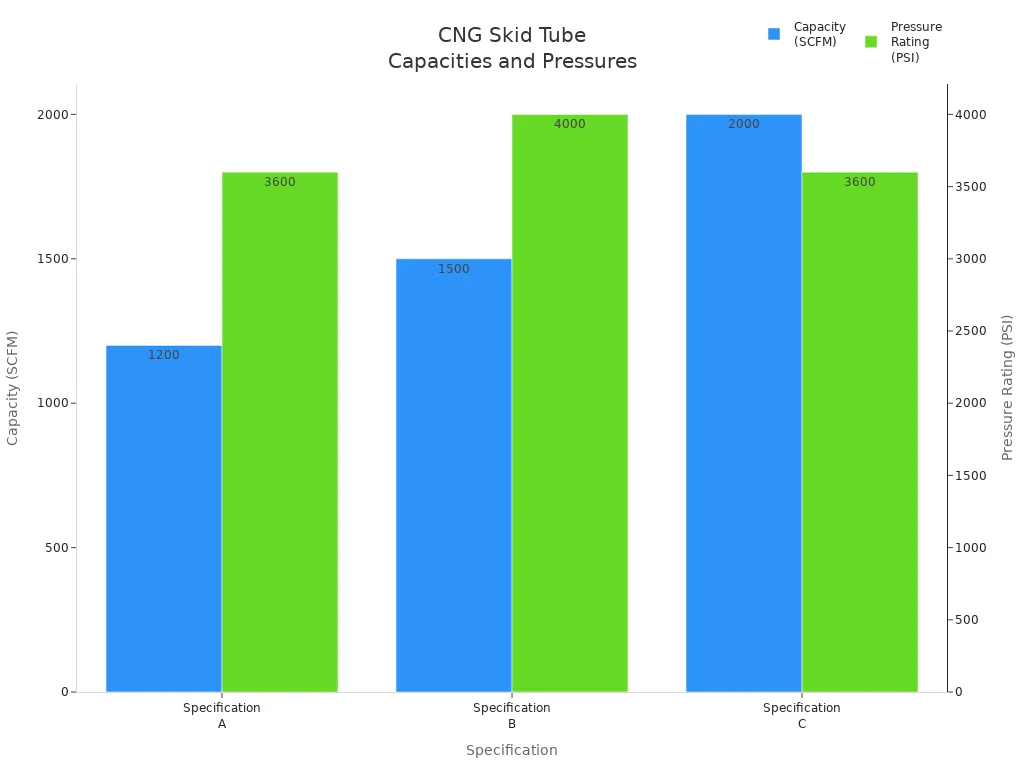
Another way to evaluate tube performance is by considering capacity and pressure ratings. The table below highlights common configurations:
|
Feature |
Specification A |
Specification B |
Specification C |
|---|---|---|---|
|
Capacity |
1,200 SCFM |
1,500 SCFM |
2,000 SCFM |
|
Pressure Rating |
3,600 PSI |
4,000 PSI |
3,600 PSI |
Operators must select the right tube capacity based on the intended application. For example, a tube with a working pressure of 25 MPa can hold up to 7,717 Nm³ of gas, with a burst pressure reaching 37.5 MPa. These specifications ensure safe and efficient storage of natural gas.
Tube Arrangement
The arrangement of high-pressure tubes is crucial for both performance and safety. Engineers design tube layouts to maximize stability and optimize gas flow. Proper arrangement reduces the risk of leaks and failures, which enhances operational safety. Efficient tube placement also improves gas delivery rates and minimizes downtime.
Managing flow and pressure changes within the skid requires careful attention. Even minor errors in tube arrangement can lead to unsafe conditions. Operators must receive thorough training to handle these complexities. Well-trained personnel ensure the system operates efficiently and safely.
Manifold System
The manifold system controls gas flow, ensuring safety and reliability during operation.
A manifold system connects the high-pressure tubes and directs the flow of compressed natural gas. This component allows operators to regulate gas distribution, maintain consistent pressure, and isolate sections for maintenance. The manifold system plays a vital role in preventing overpressure situations and supporting safe gas transfer.
Valves and Piping
Valves and piping are essential for safe operation in a CNG skid. Engineers select valves based on durability, flow characteristics, and compatibility with high-pressure environments. Common valve types include:
-
Check Valves
-
Ball Valves
-
Relief Valves
-
Needle Valves
-
Gauge Valves
-
Manifold Valves
-
Diaphragm Valves
-
Inline Filter
-
Plug Valves
-
Purge Valves
-
Bleed Valves
-
Toggle Valves
-
Block and Bleed Valves
The CNG Manual Ball Valve – SBVF360 Series offers enhanced flow and durability. The SBT Series provides a compact design suitable for various applications. The SHCV Series Check Valve prevents backflow, protecting system integrity. Proper selection and maintenance of valves and piping ensure reliable performance and safety.
Control and Safety Devices
Control and safety devices form the backbone of any CNG skid system. These components monitor, regulate, and protect the equipment during operation. Their presence ensures that compressed natural gas remains contained and delivered safely, even under challenging conditions.
Key Control Devices in CNG Skids:
-
Pressure Gauges: These instruments display the pressure inside each tube and manifold. Operators use them to verify that the system operates within safe limits.
-
Flow Meters: These devices measure the rate of gas flow during filling and dispensing. Accurate readings help maintain efficiency and prevent overfilling.
-
Temperature Sensors: These sensors track the temperature of the gas and the environment. High temperatures can signal potential risks, such as over-pressurization.
Essential Safety Devices:
-
Pressure Relief Valves: These valves automatically release gas if pressure exceeds safe thresholds. This feature prevents tube rupture and protects both equipment and personnel.
-
Emergency Shut-Off Valves: These valves allow operators to quickly isolate sections of the system during emergencies. Fast response reduces the risk of accidents.
-
Gas Leak Detectors: These sensors detect even small leaks of natural gas. Early detection helps prevent hazardous situations and ensures compliance with safety regulations.
-
Explosion-Proof Electrical Components: Motors and control panels often use explosion-proof designs. This reduces the risk of ignition in environments where gas may be present.
Tip: Regular testing and calibration of control and safety devices are essential. This practice ensures reliable operation and compliance with industry standards.
Table: Common Control and Safety Devices in CNG Skids
|
Device |
Function |
Importance |
|---|---|---|
|
Pressure Gauge |
Monitors internal pressure |
Prevents overpressure |
|
Flow Meter |
Measures gas flow rate |
Maintains efficiency |
|
Temperature Sensor |
Tracks temperature changes |
Detects abnormal events |
|
Pressure Relief Valve |
Releases excess pressure |
Prevents accidents |
|
Emergency Shut-Off Valve |
Isolates system sections |
Enables quick response |
|
Gas Leak Detector |
Senses gas leaks |
Enhances safety |
|
Explosion-Proof Components |
Prevents ignition |
Protects equipment |
Modern CNG skids often feature automated control systems. These systems use programmable logic controllers (PLCs) to monitor all sensors and actuators. Automation reduces human error and allows for remote monitoring. Operators can receive alerts and take action before minor issues become major problems.
Safety standards such as ECE R110 and ISO 11120 guide the design and maintenance of these devices. Compliance with these standards is not optional. It is a requirement for legal operation and insurance coverage.
How CNG Skids Work
Gas Storage Process
The gas storage process begins when compressed natural gas enters the high-pressure tubes of the CNG skid. Operators monitor the filling stage closely to ensure that each tube receives the correct amount of gas. Pressure gauges and temperature sensors help maintain safe operating conditions. The system uses automated controls to stop the filling process when the maximum pressure is reached.
Safe storage of compressed natural gas requires strict attention to detail. Operators follow several best practices to maintain safety and performance:
-
Regular inspections identify wear or damage to tubes and valves.
-
Frequent pressure level checks help prevent leaks and ensure optimal performance.
-
A clean storage area reduces the risk of accidents from debris or flammable materials.
-
Personnel training ensures that staff understand the risks associated with CNG and can conduct safety drills.
-
Keeping a maintenance log improves accountability and ensures thorough inspections.
These steps help prevent accidents and extend the lifespan of the equipment.
Gas Transportation
Once the gas is stored, the CNG skid can be transported to its destination. The robust frame and secure tube arrangement allow for safe movement by truck or trailer. Transportation of compressed natural gas must comply with strict regulations to protect both people and the environment.
|
Aspect |
Details |
|---|---|
|
Transportation Method |
Compressed Natural Gas (CNG) is transported using CNG skids. |
|
Regulatory Body |
The Technical Standards and Safety Authority (TSSA) governs this process. |
The Technical Standards and Safety Authority (TSSA) oversees safety for gas transport. This organization provides public education, conducts inspections, and supports compliance. These measures ensure that every step of the transportation process meets industry standards.
Dispensing and Offloading
At the destination, operators connect the CNG skid to the receiving system. The manifold and valve system control the release of gas from the tubes. Flow meters and pressure regulators ensure that the gas is dispensed at the correct rate and pressure. This process supports quick refueling for vehicles or steady supply for industrial users.
Operators follow a clear sequence during offloading:
-
Secure the skid and check all connections.
-
Open the necessary valves to begin gas transfer.
-
Monitor flow and pressure throughout the process.
-
Close valves and disconnect the system after transfer is complete.
Tip: Always follow established safety protocols during dispensing and offloading to minimize risks and maintain system integrity.
A well-designed CNG skid streamlines the entire process, from storage to delivery, ensuring reliable and efficient energy distribution.
CNG Skid Applications
Vehicle Refueling
CNG skids play a pivotal role in the transportation sector. Many fleet operators rely on these systems to refuel buses, trucks, and taxis powered by compressed natural gas. The modular design of a CNG skid allows for rapid deployment at fueling stations, even in locations without direct pipeline access. Operators can install these units at temporary or permanent sites, ensuring a steady supply of fuel for vehicles. The high storage capacity of each tube supports quick refueling, which minimizes downtime for commercial fleets. This efficiency helps logistics companies maintain tight schedules and reduces operational costs.
Note: CNG skids support the transition to cleaner transportation by enabling the use of natural gas vehicles in both urban and rural environments.
Industrial Use
Industries require reliable energy sources for manufacturing, process heating, and power generation. CNG skids deliver compressed natural gas directly to factories and plants, providing a flexible alternative to traditional fuels. The robust construction of these systems ensures safe operation in demanding industrial settings. Many facilities use CNG skids as a backup energy source during peak demand or pipeline maintenance. The ability to relocate the skid as needed gives operators greater control over their energy supply. This adaptability supports continuous production and helps companies meet environmental regulations by reducing emissions.
|
Industrial Application |
Benefit |
|---|---|
|
Manufacturing |
Stable, clean energy for operations |
|
Process Heating |
Consistent fuel supply |
|
Power Generation |
Backup and emergency energy source |
Residential and Remote Supply
Supplying natural gas to residential and remote areas presents unique challenges. Many communities lack access to pipeline infrastructure, making traditional delivery methods impractical. CNG skids address this gap by offering efficient storage and transportation solutions. Their portability allows for easy relocation and installation, which is especially valuable for operators serving isolated regions.
-
CNG skids are essential for the efficient storage and transportation of compressed natural gas, especially in areas lacking pipeline access.
-
Their portability allows for easy relocation and installation, which is particularly beneficial for operators in remote locations.
-
The rising demand for natural gas, as indicated by a 3.3% increase in 2022, underscores the necessity for effective distribution solutions like CNG skids.
Residents and businesses in these areas benefit from a reliable energy supply for heating, cooking, and electricity generation. The use of CNG skids supports local development and improves quality of life by providing access to clean, affordable energy.
Benefits of CNG Skids
Efficiency and Space Saving
CNG skids deliver significant improvements in operational efficiency and space utilization. Their modular and compact design allows for quick installation and flexible deployment. Operators can set up these systems rapidly, which reduces downtime and accelerates project timelines. The adaptability of CNG skids makes them suitable for a wide range of locations, including urban environments where space is limited.
The following table highlights the advantages of CNG tube skids compared to traditional gas storage methods:
|
Feature |
CNG Tube Skids |
Traditional Gas Storage Methods |
|---|---|---|
|
Design |
Modular and compact |
Large tanks requiring more space |
|
Installation |
Quick and flexible |
Complex and cumbersome |
|
Storage Capacity |
Up to 600 standard cubic feet per tube |
Varies, often less efficient |
|
Maintenance Costs |
Lower maintenance costs |
Higher maintenance costs |
|
Safety Features |
Enhanced safety features |
Standard safety measures |
CNG tube skids are compact and easily transportable. Their modular design allows operators to adapt the system to specific site requirements. Quick setup reduces operational interruptions and supports continuous energy supply.
Environmental Impact
CNG skids support the transition to cleaner energy by reducing greenhouse gas emissions. Compressed natural gas burns more cleanly than traditional fossil fuels, which helps lower carbon dioxide output by up to 30%. This reduction contributes to improved air quality and aligns with global sustainability goals.
The use of CNG skids also minimizes the risk of leaks and environmental contamination. Advanced safety features, such as pressure relief valves and gas leak detectors, ensure that natural gas remains contained during storage and transport. These systems help industries comply with environmental regulations and demonstrate a commitment to responsible energy management.
Note: Adopting CNG skids can help organizations meet stricter emissions standards and enhance their reputation for environmental stewardship.
Cost Effectiveness
CNG skids offer a cost-effective solution for natural gas storage and distribution. Lower maintenance costs result from the robust construction and advanced safety systems. Operators benefit from reduced labor expenses due to simplified installation and minimal downtime.
The modular nature of CNG skids allows for incremental investment. Companies can scale their systems as demand grows, avoiding large upfront expenditures. Efficient storage capacity and reliable operation further reduce operational costs over time.
-
CNG skids require less space, which lowers facility costs.
-
Quick deployment minimizes lost revenue during setup.
-
Enhanced safety features decrease the likelihood of costly incidents.
These financial advantages make CNG skids an attractive option for businesses seeking to optimize their energy infrastructure.
Safety and Maintenance
Built-in Safety Features
CNG skids incorporate advanced safety features to protect operators and equipment. Manufacturers design these systems to meet international standards, including ECE R110 and ISO 11120. Explosion-proof motors prevent ignition in hazardous environments. Three-stage compression ensures stable gas flow and reduces the risk of overpressure. Regulatory compliance is mandatory for legal operation and insurance coverage.
Key built-in safety features include:
-
Pressure regulation systems maintain safe operating conditions.
-
Proper ventilation prevents harmful gas accumulation.
-
Pressure relief valves release excess gas to avoid tube rupture.
-
Emergency shut-off valves allow rapid isolation during incidents.
-
Gas leak detectors provide early warning of leaks.
-
Explosion-proof electrical components reduce ignition risks.
Note: Regular testing and calibration of safety devices are essential for reliable operation.
Maintenance Needs
Routine maintenance is critical for the long-term reliability of CNG skids. Operators must follow a structured schedule to ensure optimal performance and safety. Maintenance procedures focus on preventing leaks, corrosion, and equipment failure.
Recommended maintenance practices:
-
Conduct regular visual inspections to identify leaks or damage.
-
Perform pressure testing periodically to detect hidden leaks.
-
Maintain a detailed log of all maintenance activities to track performance.
-
Clean the skids regularly to prevent dust and debris accumulation.
-
Ensure all fittings and valves remain free from contaminants.
-
Address any signs of corrosion or wear immediately to prevent larger issues.
-
Inspect all equipment for wear and damage.
-
Store CNG tube skids in well-ventilated areas away from flammable materials.
-
Organize skids for easy access and secure each tube to prevent movement.
Tip: Frequent visual checks and prompt attention to maintenance issues help minimize downtime and extend equipment lifespan.
Operator Training
Proper training is essential for safe and efficient operation of CNG skids. Personnel must understand safety protocols and emergency procedures. Training programs cover equipment handling, maintenance routines, and regulatory requirements.
Best practices for operator training:
-
Conduct regular safety drills and familiarize personnel with emergency procedures.
-
Ensure the use of appropriate personal protective equipment (PPE).
-
Train staff on safety protocols to minimize risks associated with improper handling.
-
Provide ongoing education on regulatory compliance and industry standards.
Operators who receive thorough training contribute to a safer workplace and help maintain the reliability of CNG skid systems. Well-trained staff can identify potential hazards early and respond effectively during emergencies.
Safety and maintenance are the foundation of reliable CNG skid operation. Regular inspections, proper training, and adherence to protocols ensure safe energy distribution and protect both people and assets.
Innovations in CNG Skids
Modular Design
Modular design has transformed the way industries deploy and manage CNG skids. Manufacturers now build skids with interchangeable components, allowing operators to scale systems quickly. This approach supports rapid installation and easy relocation. Lightweight materials, such as advanced alloys and composites, have replaced traditional steel in many units. These materials reduce overall weight, making transportation and handling more efficient. Operators benefit from improved portability, especially in urban environments where space is limited.
Modular skids enable flexible expansion. Operators can add or remove storage tubes based on demand, optimizing gas supply for each site.
Modern modular designs also feature standardized interfaces. These interfaces simplify integration with existing infrastructure. Maintenance teams can swap out faulty parts without extensive downtime. The result is a system that adapts to changing operational needs and minimizes disruption.
Customization Options
Customization has become a key feature in the latest generation of CNG skids. Manufacturers offer tailored solutions for diverse applications, including oil and gas plants, manufacturing facilities, and remote energy sites. Operators can select the number of storage tubes, choose specific valve types, and configure manifold systems to match their requirements.
-
Space-saving designs fit into tight locations, maximizing usable area.
-
Integrated monitoring systems provide real-time data on gas levels, pressure, and temperature.
-
Custom control panels allow operators to manage dispensing rates and safety protocols.
These options enhance operational flexibility. Facilities with unique energy demands can request skids built to their specifications. Real-time monitoring improves safety and reduces maintenance costs by up to 25%. Operators receive alerts when maintenance is needed, preventing unexpected failures.
|
Customization Feature |
Benefit |
|---|---|
|
Tube Configuration |
Matches storage needs |
|
Valve Selection |
Improves flow control |
|
Monitoring Integration |
Enhances safety and efficiency |
|
Space-Saving Layout |
Fits urban or industrial sites |
Recent Advances
Recent advances in CNG skid technology focus on automation and digital integration. Integrated monitoring systems now collect and transmit operational data to centralized platforms. Operators can track performance remotely, responding quickly to any issues. Automated safety features, such as emergency shut-off valves and leak detectors, protect personnel and assets.
The adoption of lightweight materials and digital monitoring has set new standards for efficiency and reliability.
Manufacturers continue to innovate by developing skids with enhanced corrosion resistance and improved pressure management. These improvements extend equipment lifespan and reduce maintenance intervals. The industry has also seen the introduction of smart control systems, which optimize gas flow and storage based on real-time demand.
:bulb: Tip: Investing in advanced CNG skids ensures compliance with evolving safety standards and supports sustainable energy goals.
CNG skids deliver efficient, safe, and sustainable solutions for natural gas storage and transport. Their modular design, advanced safety features, and adaptability make them essential in today’s energy landscape. Industries seeking reliable and eco-friendly energy should evaluate CNG skids for their operations.
For more insights on CNG technology and implementation, explore industry resources or consult with a certified energy solutions provider.
FAQ
What is the main purpose of a CNG skid?
A CNG skid stores, transports, and dispenses compressed natural gas safely. It provides a flexible solution for energy delivery in areas without pipeline access.
How much gas can a typical CNG tube skid hold?
Most CNG tube skids can store up to 1,000 standard cubic meters of gas per tube. The total capacity depends on the number of tubes in the skid.
Where are CNG skids commonly used?
CNG skids serve fueling stations, industrial plants, and remote communities. They support vehicle refueling, manufacturing, and off-grid energy supply.
What safety features are included in CNG skids?
CNG skids include pressure relief valves, emergency shut-off valves, gas leak detectors, and explosion-proof components. These features protect both operators and equipment.
How often should CNG skids be inspected?
Operators should perform visual inspections daily and schedule comprehensive maintenance checks monthly. Regular inspections help prevent leaks and ensure safe operation.
Are CNG skids environmentally friendly?
Yes. CNG skids support the use of natural gas, which emits up to 30% less greenhouse gases than traditional fuels. This helps reduce the environmental impact of energy consumption.
Author & E-A-T Statement
Author: SinoCleansky Technical Team
Expertise: 15+ years in cryogenic equipment design for LNG/CNG storage and transport.
Authority: Global supplier of ISO-certified LNG/CNG solutions for energy and industrial sectors.
Trust: Manufactured to international standards (ISO/ASME/DOT), ensuring safety and long-term reliability.